
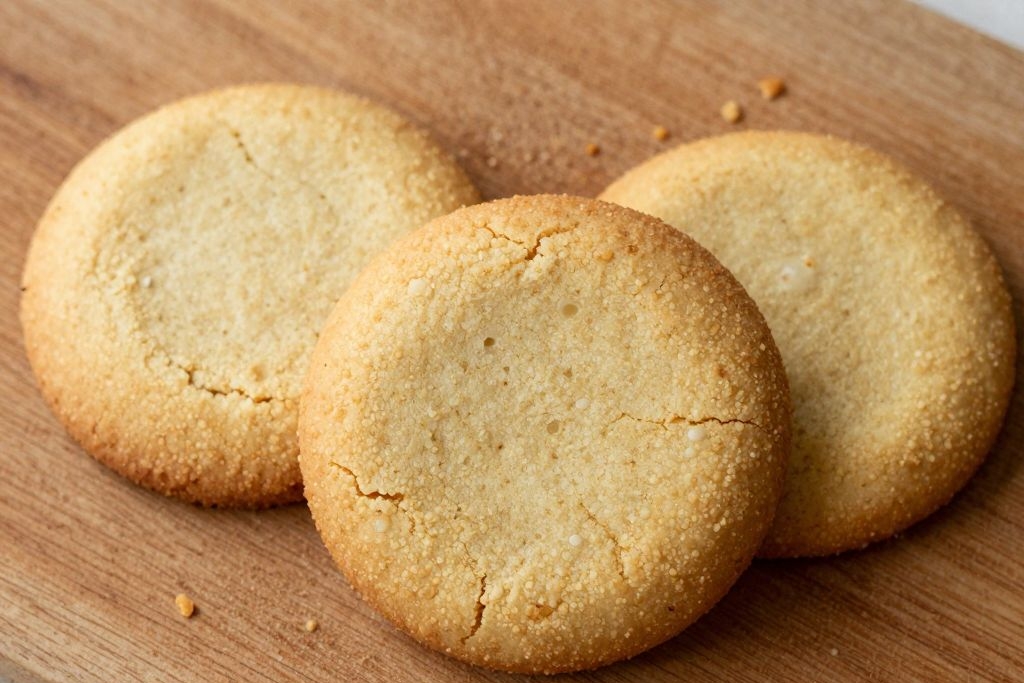

Ever bitten into a cookie that practically evaporates on your tongue? That’s exactly what we’re making today.
These shortbread cookies are ridiculously tender – one bite and the buttery, vanilla-scented crumb just melts away slowly. No crunchy edges, no tough bites, just pure bliss.
I’ve tested this recipe a dozen times (my family is sick of me, honestly), and I promise you’ll get that melt-in-your-mouth magic every single time.
1. Allergens
Allergen alert: These cookies contain wheat (gluten) and dairy (butter). The vanilla extract is typically alcohol-based but fine for most diets.
For a gluten-free version, swap the all-purpose flour for a cup-for-cup gluten-free blend with xanthan gum. For dairy-free, use cold vegan butter – though the texture may vary slightly.
2. Ingredient notes & substitutions
Let’s talk butter. Use unsalted butter so you control the salt. European-style butter with higher fat content makes even richer cookies.
Powdered sugar is non-negotiable here. Granulated sugar won’t dissolve as well, giving you gritty shortbread. Powdered sugar creates that delicate, meltaway crumb.
Flour plus a little cornstarch is my secret weapon. For every cup of flour, add two tablespoons of cornstarch. It tenderizes the gluten and gives you that “dissolves slowly” effect.
Vanilla – use the real stuff. Pure vanilla extract (not imitation) gives a warm, floral note that kisses every crumb. You can also scrape half a vanilla bean pod for extra flecks.
Don’t skip the salt. A quarter teaspoon of fine sea salt balances the sweetness and makes the butter shine. No salt? Use salted butter and omit the added salt.
3. Pro tips
Chill your dough for at least 30 minutes. This firms up the butter, prevents spreading, and locks in that tender texture.
When creaming butter and sugar, go for light and fluffy but not too long. Over-creaming adds air, which makes cookies puff instead of staying dense and buttery.
Handle the dough as little as possible. Once you add flour, mix just until combined. Overworking develops gluten, and nobody wants tough shortbread.
Bake at 325°F (160°C), not 350°F. Low and slow baking dries the cookies gently without browning the edges too fast, preserving that pale, meltaway crumb.
Before baking, prick each cookie with a fork (a classic shortbread pattern). This lets steam escape and keeps them from warping.
Use a sharp knife to score round logs or cut shapes evenly. For uniform thickness, roll dough between two sheets of parchment paper. Easy peasy.
4. Storage & make-ahead
These cookies stay fresh in an airtight container at room temperature for up to 1 week. Keep them away from humidity or they’ll lose that delicate crumb.
To make ahead, freeze the unbaked dough. Shape it into a log, wrap tightly in plastic, then foil. Freeze for up to 3 months. Slice and bake directly from frozen – add 2-3 minutes to the bake time.
Baked cookies freeze beautifully too. Cool completely, then layer in a freezer bag with parchment between layers. Thaw at room temp for 10 minutes before serving.
5. Serving suggestions
These shortbread cookies are perfect with tea, coffee, or a tall glass of cold milk. For a fancy touch, dip half of each cookie in melted dark chocolate or drizzle with white chocolate. Or crumble them over vanilla ice cream for a quick dessert.
6. Use your leftovers
If you have leftover crumbled cookies (or accidental broken pieces), don’t toss them. Turn them into a pie crust – mix with melted butter and press into a pan for cheesecake or cream pie.
Crushed shortbread also makes a lovely topping for yogurt, fruit parfaits, or pudding. Sprinkle over baked apples or peaches before serving.
You can even use whole leftover cookies as a base for ice cream sandwiches. Sandwich a scoop of your favorite ice cream between two cookies and freeze for an hour.
Stale shortbread? Blitz into fine crumbs and use as a “flour” for another batch of cookies – replace up to 1/4 cup of flour with shortbread crumbs for extra buttery flavor.
7. Common mistakes & how to fix them
Mistake #1: Cookies spread too much. That usually means your butter was too soft or you didn’t chill the dough. Fix: Always chill at least 30 minutes, and use butter that’s cool but pliable (65°F/18°C).
Mistake #2: Dry or sandy texture. Overbaking or too much flour is the culprit. Measure flour by spooning it into the cup and leveling off – never scoop directly from the bag. Bake just until the edges are lightly golden, not brown.
8. Variations by diet or flavor profile
Lemon shortbread: Add 1 tablespoon of lemon zest and 1 teaspoon of lemon juice to the dough. Roll in sparkling sugar before baking for a crunchy top.
Chocolate chip shortbread: Fold in 1/2 cup of mini chocolate chips after mixing the dough. Keep them mini so they don’t overwhelm the delicate crumb.
Vegan version: Use plant-based butter (like Miyoko’s or Earth Balance) and ensure your sugar is vegan-friendly. The texture will be slightly less crisp but still melt-in-your-mouth.
Gluten-free option: Replace all-purpose flour with a 1:1 gluten-free flour blend that contains rice flour and potato starch. Add 1/4 teaspoon of xanthan gum if your blend doesn’t have it.
Spiced chai shortbread: Whisk 1 teaspoon of ground cinnamon, 1/2 teaspoon of cardamom, 1/4 teaspoon of ginger, and a pinch of cloves into the flour. The warm spices pair beautifully with vanilla.
9. Why this recipe works / The science
Cornstarch is the unsung hero. It coats the flour proteins, shortening gluten strands and creating a tender, almost powdery crumb that dissolves on your tongue.
Powdered sugar contains cornstarch too (about 3%). That extra starch further inhibits gluten development, giving you that signature shortbread “shortness” – a baking term for high fat, low gluten.
Butterfat is key. With a fat-to-flour ratio of roughly 1:2, these cookies have just enough structure to hold together but enough fat to break apart easily when you bite.
Baking at a lower temperature (325°F) allows the cookies to dry out slowly without browning the milk solids in the butter. That’s why they stay pale and buttery instead of toasty.
The vanilla isn’t just for flavor – its alcohol content helps dissolve the sugar slightly, creating a more homogeneous dough. But the real magic is the aroma that hits you as they bake.
Finally, no eggs means no added moisture or protein that would toughen the crumb. Shortbread relies solely on butter for richness, and that’s what makes it so irresistible.
10. Frequently Asked Questions (FAQ)
Can I use salted butter? Yes, just omit the added salt in the recipe. But unsalted gives you better control, especially if you’re adding toppings like chocolate.
Why are my cookies crumbly? They might be overbaked or under-hydrated. Add 1-2 teaspoons of milk or water to the dough if it feels too dry. Also let them cool completely on the pan – they firm up as they cool.
Can I double this recipe? Absolutely. Shortbread freezes beautifully, so go ahead and make a double batch. Just don’t overcrowd your baking sheets – bake in batches or use two racks, rotating halfway.
11. Call to action
Loved this recipe? Drop a comment below with your favorite shortbread twist! Share this post with a fellow cookie lover, and subscribe to my newsletter for more buttery, meltaway treats delivered straight to your inbox.
And there you have it – the most tender, vanilla-kissed shortbread cookies that really do dissolve slowly like edible snow. I’ve lost count of how many batches disappeared before I could photograph them.
Make these for the holidays, for tea time, or just because Tuesday is hard. They’re simple, forgiving, and honestly a little dangerous (I warned you).
Now go preheat that oven, and don’t forget to tag me when you make them. Happy baking!
Recipe Name: Melt-in-Your-Mouth Vanilla Shortbread Cookies
Servings: 24 cookies (about 6 servings of 4 cookies each)
Estimated Cost Per Serving: $0.65
Prep Time: 15 minutes
Cook Time: 18-20 minutes
Total Time: 1 hour (includes chilling)
Course: Dessert
Cuisine: Scottish-American
Calories Per Serving: 210 (per 4 cookies)
Diet: None (contains gluten and dairy)
Difficulty: Easy
Ingredients
1 cup (226g) unsalted butter, cold but pliable (65°F/18°C)
1/2 cup (60g) powdered sugar
1 teaspoon pure vanilla extract
1 3/4 cups (210g) all-purpose flour
1/4 cup (30g) cornstarch
1/4 teaspoon fine sea salt
Instructions
- In a large bowl, beat the butter with an electric mixer on medium speed until creamy, about 1 minute.
- Add the powdered sugar and beat until light and fluffy, about 2 minutes. Scrape down the bowl.
- Beat in the vanilla extract until combined.
- In a separate bowl, whisk together the flour, cornstarch, and salt.
- Add the dry ingredients to the butter mixture. Mix on low speed just until a soft dough forms – do not overmix.
- Shape the dough into a disc, wrap in plastic, and refrigerate for at least 30 minutes (or up to 3 days).
- Preheat oven to 325°F (160°C). Line two baking sheets with parchment paper.
- On a lightly floured surface, roll the dough to 1/4-inch thickness. Cut into rounds or any shape using a cookie cutter.
- Place cookies 1 inch apart on prepared sheets. Prick each cookie twice with a fork.
- Bake for 18-20 minutes, until edges are just barely golden. The tops will remain pale.
- Let cool on the baking sheet for 5 minutes, then transfer to a wire rack to cool completely.