
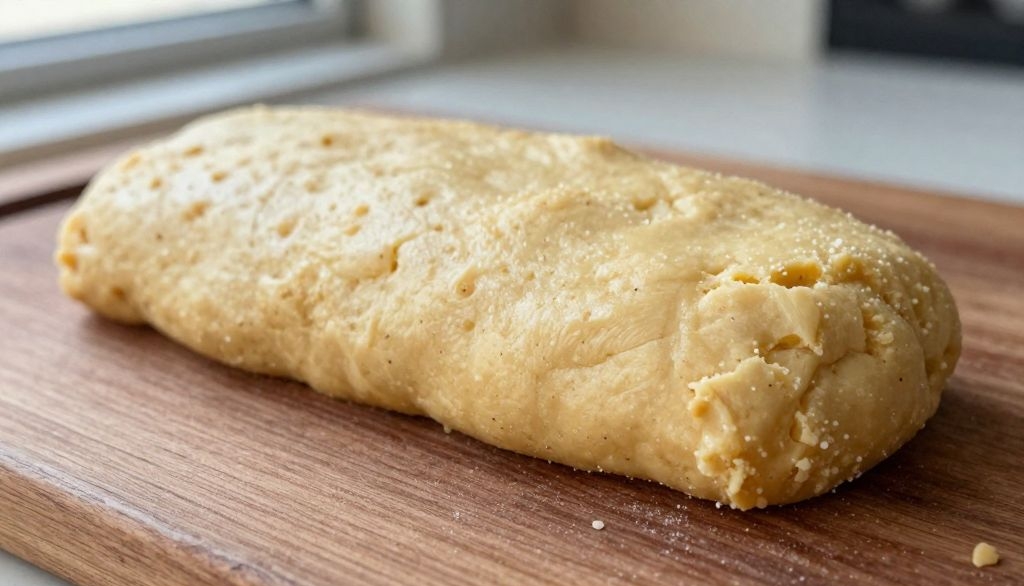

Ever pulled a sugar cookie from the oven only to find a sad, hard hockey puck? Yeah, me too. That’s why this buttery, tender, and light sugar cookie dough recipe is about to become your new best friend. It rolls out like a dream and bakes into those soft, melt-in-your-mouth cookies you actually want to eat.
No dry, crumbly disasters here. Just a simple dough that handles beautifully and delivers every single time. Ready to make some magic? Let’s go.
1. Allergens
This recipe contains wheat (gluten), dairy (butter), and eggs. If you need to avoid those, head down to the variations section for swaps.
2. Ingredient notes & substitutions
Use unsalted butter here. I know, salted butter is tempting, but we want total control over the salt level. Let the butter come to cool room temperature – not greasy or melty, just soft enough to leave a dent when you poke it.
All-purpose flour is your safest bet for that tender-but-not-fragile texture. Cake flour makes cookies too delicate, and bread flour adds too much chew. If you only have self-rising flour, skip the baking powder and salt.
Granulated sugar gives the edges a slight sparkle and crunch, while powdered sugar would make them too sandy. You can swap in coconut sugar for a deeper caramel note, but the dough will be darker and slightly less tender.
For a dairy-free version, use high-quality vegan butter sticks (not tub margarine). The dough will be a bit softer, so chill it an extra 30 minutes. Egg-free? Try a flax egg (1 tbsp ground flax + 3 tbsp water per egg), but expect a crumblier cookie.
3. Pro tips
Chill the dough for at least two hours. I’m serious – impatient chilling leads to spreading puddles instead of pretty cookies. Wrap it tight in plastic so it doesn’t dry out.
Roll between two sheets of parchment paper. This saves you from dusting flour everywhere and overworking the dough. Plus, no sticking to the counter!
4. Storage & make-ahead (fridge/freezer)
You can keep this sugar cookie dough in the fridge for up to 5 days. Just wrap it well in plastic wrap, then pop it in an airtight container to stop it from absorbing fridge smells. When you’re ready, let it sit at room temperature for about 15 minutes before rolling – cold dough cracks.
Freezing is where this dough shines. Shape it into a disc, wrap in plastic, then foil, and freeze for up to 3 months. To use, thaw overnight in the fridge, then proceed as usual.
Want pre-cut cookies? Roll the dough out between parchment before freezing, then slice into shapes while still partially frozen. It’s a massive time-saver for holiday baking marathons.
You can also freeze baked sugar cookies (undecorated) for up to 2 months. Thaw at room temp, then decorate. Just don’t freeze frosted cookies – the frosting gets weepy.
For a quick make-ahead trick, portion the dough into balls and freeze on a baking sheet. Once solid, toss them in a bag. Bake from frozen, adding 2-3 minutes to the time.
5. Serving suggestions (complete the meal)
These sugar cookies are wonderful on their own with a tall glass of cold milk (oat milk works great too). For a fancier dessert plate, sandwich two cookies with lemon curd or raspberry jam – instant cookie sandwiches.
Pair them with coffee or chai tea for an afternoon pick-me-up. The buttery vanilla notes play beautifully with spiced or caramel lattes. If you’re hosting a party, set out a platter with fresh berries and whipped cream for a DIY cookie sandwich bar.
For holiday meals, serve these alongside gingerbread cookies and peppermint bark on a dessert table. They’re mild enough to balance stronger flavors. Kids love decorating them with sprinkles and royal icing – make it an activity.
Crush a few cookies over vanilla ice cream with a drizzle of caramel sauce. Trust me, it’s ridiculous. You can also use them as a cheesecake crust: just pulse in a food processor with melted butter.
Feeling extra? Dip half of each cookie in melted chocolate and let it set on parchment. Now you have bakery-level treats for gifting or snacking.
6. “Use your leftovers” (reduce waste)
Got leftover baked cookies that are slightly stale? Crush them into fine crumbs and use as a pie crust or trifle layer. Mix with melted butter, press into a pan, and bake for 10 minutes – done.
Leftover dough scraps? Reroll them once, but don’t overwork. After that, press small pieces into a mini muffin tin to make cookie cups. Fill with chocolate ganache or fruit preserves.
You can also freeze unbaked scraps in a small bag. When you have enough, thaw, smush together, and roll out for “patchwork cookies.” They look rustic and taste exactly the same.
7. Common mistakes & how to fix them
Overmixing the dough develops gluten, which turns tender cookies into tough little disks. Mix just until the flour disappears – then stop immediately. Your arm might twitch, but resist!
8. Variations by diet or flavor profile
For a vegan version, swap butter for plant-based sticks (like Miyoko’s or Earth Balance) and use a flax egg (1 tbsp ground flax + 3 tbsp water per egg, let sit 5 minutes). Chill the dough an extra hour – vegan butter is softer.
Gluten-free bakers can replace the flour with a cup-for-cup GF blend that contains xanthan gum. Add an extra tablespoon of milk (or non-dairy milk) because GF flours drink up moisture. No need to change anything else – the texture will be slightly more delicate.
Want lemon sugar cookies? Add 1 tbsp lemon zest and 1 tsp lemon extract, then roll dough in lemon sugar (mix granulated sugar with more zest). For chocolate chip sugar cookies, fold in ½ cup mini chocolate chips after mixing. Press them in gently so they don’t streak the dough.
Spiced chai version: Add 1 tsp ground cinnamon, ½ tsp cardamom, ¼ tsp ginger, and a pinch of cloves to the flour. Brush baked cookies with a simple vanilla glaze for extra love. Almond lovers can replace vanilla with 1 tsp almond extract – but go easy, it’s potent.
9. “Why this recipe works” / The science
Creaming butter and sugar properly creates tiny air pockets, which make the dough light and tender. That two-minute beating step isn’t just for fun – it’s the foundation of a cookie that doesn’t feel like a brick.
The resting (chilling) period solidifies the butter so the dough holds its shape in the oven. Without it, the butter melts too fast and your cute snowflakes become amorphous blobs. Science!
10. Frequently Asked Questions (FAQ)
Can I make this without a stand mixer? Absolutely. A hand mixer works fine, or good old elbow grease with a wooden spoon. Just soften the butter really well and prepare for a mini arm workout.
Why are my cookies spreading too much? Two culprits: dough wasn’t chilled enough, or you over-softened the butter. Pop the dough back in the fridge for 30 minutes and try again. Also check that your baking soda/powder isn’t expired.
Can I double this recipe? Yes, it doubles beautifully. Just mix in batches if your bowl is small. The dough freezes so well that I often make a double batch and keep half in the freezer for emergencies (cookie emergencies are real).
How do I get perfectly round cookies without a cutter? Use a round biscuit cutter, or even a drinking glass with a floured rim. For uniform size, weigh your dough balls – about 1.5 ounces each for medium cookies.
My dough is too crumbly! What now? Sprinkle in milk, one teaspoon at a time, until it comes together. You probably measured flour by scooping instead of spooning. Next time, spoon the flour into the measuring cup and level it – it’s a game changer.
11. Call to action (comment, share, subscribe)
Alright, baker – you’ve got the goods. Make this dough, then come back and tell me how it went. Did you add sprinkles? Did you eat half the dough raw? (No judgment, but maybe bake some first.)
Drop a comment below with your favorite sugar cookie memory. And if you loved this recipe, share it with a friend who needs buttery, tender cookies in their life. Don’t forget to subscribe for more no-fail recipes delivered straight to your inbox.
Conclusion
So there you have it – a sugar cookie dough that’s actually buttery, tender, and light, not a crumbly mess or a greasy puddle. You’ve got the chilling trick, the ingredient swaps, and the confidence to roll it out like a pro.
Make a batch this weekend. Decorate them with kids, gift them to neighbors, or just hoard them on your kitchen counter. Whatever you do, don’t forget to tag me in your cookie photos. Now go preheat that oven.
Recipe Name: Buttery, Tender & Light Sugar Cookies
Servings: 24 cookies (using 2.5-inch cutter)
Estimated Cost Per Serving: $0.25 per cookie (approx.)
Prep Time: 15 minutes
Cook Time: 10 minutes
Total Time: 25 minutes (plus 2 hours chilling)
Course: Dessert
Cuisine: American
Calories Per Serving: 120
Diet: None (contains gluten, dairy, eggs)
Difficulty: Easy
Ingredients
- 1 cup (226g) unsalted butter, cool room temperature
- 1 cup (200g) granulated sugar
- 1 large egg, room temperature
- 2 teaspoons vanilla extract
- 3 cups (360g) all-purpose flour (spooned and leveled)
- ½ teaspoon baking powder
- ½ teaspoon salt
- 2 tablespoons milk (if needed for dough consistency)
Instructions
First, in a large bowl (or stand mixer with paddle attachment), beat the butter and sugar together on medium speed for 2 full minutes. Scrape down the sides. You want it pale and fluffy – that’s the air you need.
Next, add the egg and vanilla. Beat until combined, about 30 seconds. The mixture might look slightly curdled; that’s fine. Don’t overmix.
In a separate bowl, whisk the flour, baking powder, and salt. Gradually add the dry ingredients to the wet mixture, mixing on low speed just until no flour streaks remain. If the dough seems too dry, add milk one teaspoon at a time until it comes together.
Turn the dough out onto a lightly floured surface and gently press it into a disc. Divide into two discs if easier. Wrap each disc tightly in plastic wrap and refrigerate for at least 2 hours (or up to 5 days).
When ready to bake, preheat your oven to 350°F (175°C). Line baking sheets with parchment paper. Let the dough sit at room temperature for 10 minutes if it’s rock-hard.
Roll the dough between two sheets of parchment paper to ¼-inch thickness. Peel off the top sheet and cut into shapes with cookie cutters. Transfer shapes to the prepared baking sheets, spacing them 1 inch apart.
Bake for 8-10 minutes, until the edges are just barely golden. The centers will look soft and matte – that’s perfect for tender cookies. Let them cool on the baking sheet for 5 minutes, then move to a wire rack to cool completely. Decorate as desired. Enjoy!