
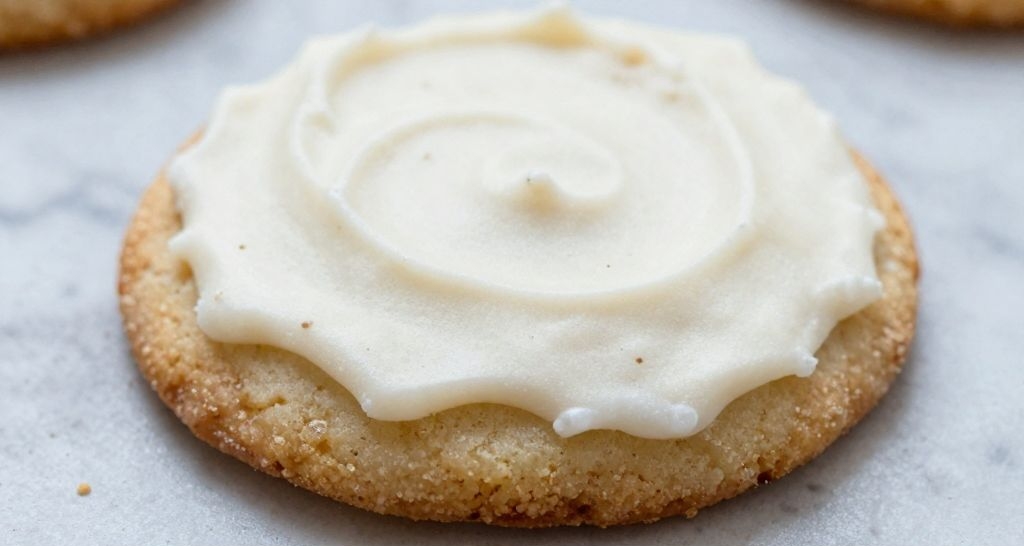

You know that little tub of frosting from the store? The one that tastes more like sweet plastic than actual buttercream? Yeah, we’re done with that.
This homemade sugar cookie frosting takes five minutes, uses real ingredients, and actually tastes like something you’d want to eat with a spoon. (No judgment if you do.)
I’ve tested this against the popular brand, and my family couldn’t tell the difference – except they asked for seconds of mine. So let’s get into it.
1. Allergens
This classic frosting contains dairy (butter and milk) and may contain soy if your powdered sugar or vanilla extract includes soy-based additives. It is naturally gluten-free and nut-free as written, but always check labels for cross-contamination warnings.
2. Ingredient notes & substitutions
Unsalted butter is your best bet here. Salted butter works too, just skip the extra pinch of salt I call for. If you need dairy-free, use a high-quality vegan butter stick – the kind from a tub is too soft and will make runny frosting.
Powdered sugar has no good substitute. Don’t try granulated sugar; you’ll get gritty sadness instead of silky frosting. For a less sweet version, you can sub up to 1/4 cup of the powdered sugar with cornstarch or use a commercial low-sugar powdered sugar blend.
Milk is for thinning. Whole milk gives the richest texture, but any milk works – almond, oat, or even water in a pinch (though water makes it less creamy). Vanilla extract is non-negotiable. Use pure vanilla if you can; the flavor difference is real.
If you’re out of vanilla, try almond extract for a classic sugar cookie taste, but use half the amount – it’s strong stuff. I learned that the hard way when my frosting tasted like marzipan nightmare.
3. Pro tips
Start with softened butter, not melted. Melted butter = thin, greasy frosting that slides right off your cookies. Leave the butter on the counter for an hour, or microwave it in 5-second bursts until it’s squishy but not liquid.
Sift your powdered sugar unless you enjoy crunchy lumps. A quick shake through a mesh strainer takes ten seconds and saves you from cursing mid-pipe.
4. Storage & make-ahead (fridge/freezer)
You can make this frosting up to one week ahead and keep it in an airtight container in the fridge. When you’re ready to use it, let it sit on the counter for 20 minutes, then give it a good stir with a spatula – it’ll fluff right back up.
For freezer storage, scoop the frosting into a zip-top bag or container and freeze for up to three months. Thaw overnight in the fridge, then bring to room temperature and re-whip with a hand mixer for 30 seconds to restore the texture.
Do not freeze frosting that’s already on cookies unless the cookies themselves freeze well. The texture can get a little weepy on thawing, so I only do that for decorated cookies that are purely for looks.
5. Serving suggestions (complete the meal)
Obviously this goes on sugar cookies, but don’t stop there. Spread it on brownies for a frosted brownie bite, or dollop it on cinnamon rolls instead of regular glaze. It’s also fantastic sandwiched between two graham crackers for a lazy homemade “cookie.”
For a full dessert spread, serve your frosted cookies alongside a scoop of vanilla bean ice cream and a handful of fresh berries. The cold, creamy contrast makes the frosting taste even better. Or just eat the frosting straight from the bowl while watching Netflix – that’s a complete meal in my book.
6. “Use your leftovers” (reduce waste)
Leftover frosting will keep in the fridge for a week, as mentioned. But if you have less than half a cup left, don’t toss it. Stir it into plain oatmeal for a dessert breakfast, or melt it gently and drizzle over popcorn with a pinch of sea salt.
Another trick: thin the leftover frosting with a tablespoon of milk, then use it as a glaze for scones or pound cake. You can also freeze it in an ice cube tray, then pop out a cube to stir into your coffee. Sweet, creamy, and no waste.
7. Common mistakes & how to fix them
Frosting too runny? You added too much milk. Beat in more powdered sugar, one tablespoon at a time, until it thickens. Too thick? Add milk one teaspoon at a time until it reaches spreadable consistency.
Greasy or separated? That means your butter was too warm or you over-mixed. Chill the bowl in the fridge for ten minutes, then re-whip on low speed just until combined. Don’t keep beating – that makes it worse.
And if your frosting tastes only like sugar and nothing else, you forgot the salt. A tiny pinch of salt cuts the sweetness and makes the vanilla pop. Fix it by sprinkling salt in and mixing well.
8. Variations by diet or flavor profile
Vegan: Use plant-based butter (like Miyoko’s or Earth Balance) and unsweetened almond milk. Dairy-free is the same swap. Keto: Replace powdered sugar with a powdered erythritol-based sweetener, and use coconut oil instead of butter. The texture won’t be identical, but it works.
Flavor variations: Add 1/4 teaspoon almond extract for classic wedding cookie flavor, or swap vanilla for lemon extract plus a teaspoon of lemon zest. For chocolate lovers, sift in two tablespoons of cocoa powder and increase the milk by a teaspoon.
Color it up with gel food coloring – liquid coloring will thin the frosting too much. One drop of gel goes a long way. I once added five drops of red and ended up with Valentine’s Day massacre pink, so start small.
9. “Why this recipe works” / The science
The magic here is the fat-to-sugar ratio. Pillsbury-style frostings use hydrogenated oils and stabilizers to stay shelf-stable, but real butter creates tiny air pockets when creamed. Those pockets trap the powdered sugar and milk into a stable emulsion that spreads smoothly and holds its shape.
Powdered sugar contains cornstarch, which absorbs just enough moisture to prevent crystallization. That’s why you never get a gritty mouthfeel – the cornstarch acts like a microscopic sponge. And the pinch of salt? It suppresses bitterness and lets your taste buds focus on the sweet and creamy notes. Science tastes delicious.
10. Frequently Asked Questions (FAQ)
Can I use this frosting on warm cookies? No. Wait until your cookies are completely cool, or the frosting will melt into a sad, oily puddle. Patience, grasshopper.
How long does frosted cookie last at room temperature? About 2-3 days in an airtight container. The butter is fine at room temp for that long, but after day three, the frosting can start to separate.
Can I pipe this frosting with a tip? Yes, but chill it for 15 minutes first. Room-temp frosting is a little soft for intricate piping. Chilled, it holds swirls and rosettes beautifully.
My frosting tastes like butter – what went wrong? You didn’t beat it enough. Butter needs at least two minutes of creaming before adding sugar to break down its fat globules. Beat longer next time. If it’s already made, add a little more powdered sugar and vanilla.
Does this work for royal icing? No. Royal icing uses egg whites and dries hard. This stays soft and creamy – different beast entirely.
11. Call to action (comment, share, subscribe)
Alright, friend, now it’s your turn. Make this frosting, slather it on something, and come back to tell me how it went. Did you add sprinkles? Eat it with a spoon? I need details.
Drop a comment below with your favorite sugar cookie memory, and share this post with anyone who still buys those little plastic tubs. They need our help. And if you want more no-fuss dessert wins, subscribe to the email list – I send out a new recipe every week, and I never spam. (I hate spam almost as much as store-bought frosting.)
So there you have it. A five-minute frosting that beats the blue-and-white tub without any weird preservatives or that faint chemical aftertaste. Your sugar cookies deserve better, and honestly, so do you.
Now go forth and frost. And maybe hide a little extra in the back of the fridge for late-night spoon raids. I won’t tell.
Recipe Name: Homemade Sugar Cookie Frosting (Better Than Pillsbury)
Servings: 6 (enough to frost 24 medium sugar cookies)
Estimated Cost Per Serving: $0.32
Prep Time: 5 minutes
Cook Time: 0 minutes
Total Time: 5 minutes
Course: Dessert
Cuisine: American
Calories Per Serving: 118
Diet: Vegetarian (can be Vegan/Dairy-Free)
Difficulty: Easy
Ingredients
- 1/2 cup (1 stick / 113g) unsalted butter, softened
- 2 cups (240g) powdered sugar, sifted
- 2 tablespoons (30ml) whole milk (or any milk)
- 1 teaspoon vanilla extract
- 1/8 teaspoon fine salt
Instructions
- In a medium bowl, beat the softened butter with a hand mixer on medium speed until creamy and pale, about 2 minutes. Scrape down the sides of the bowl.
- Add half of the sifted powdered sugar, the milk, vanilla extract, and salt. Mix on low speed until the sugar is incorporated (about 30 seconds), then increase to medium-high and beat for 1 minute.
- Add the remaining powdered sugar and beat on low until combined, then switch to medium-high for another 30 seconds. The frosting should be smooth, spreadable, and slightly fluffy.
- If the frosting is too thick, add more milk 1 teaspoon at a time until it loosens up. If too thin, add more powdered sugar 1 tablespoon at a time.
- Use immediately on completely cooled sugar cookies, or store in an airtight container in the fridge for up to a week. Bring to room temperature and re-whip before using.