
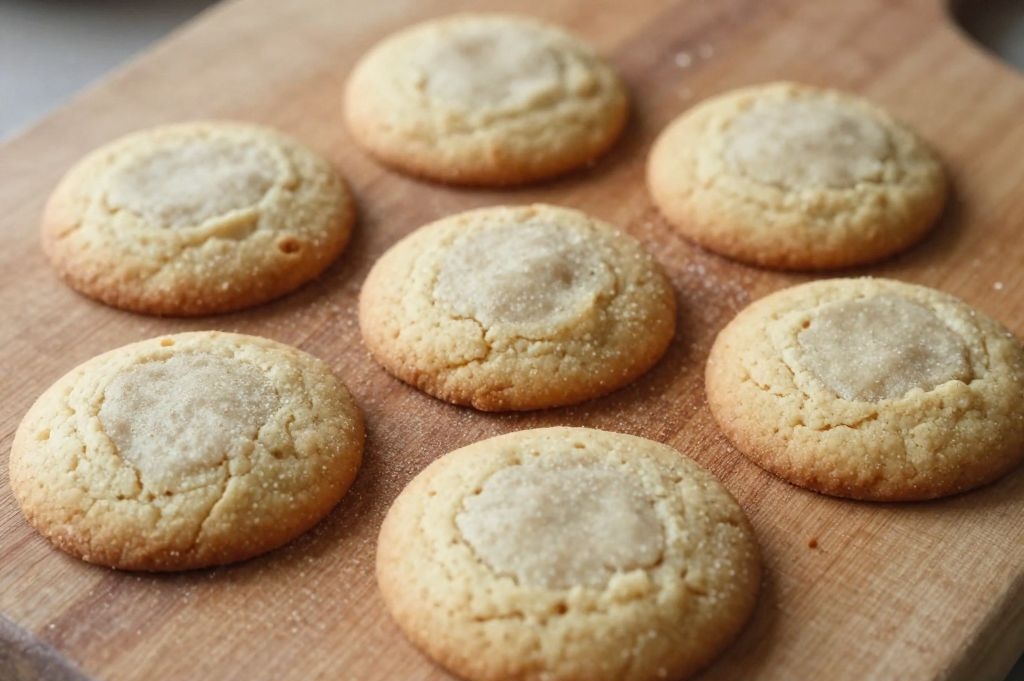

You know that sad, sandy crumble most gluten free sugar cookies turn into? It’s like biting into a beach vacation gone wrong. But I’m here to tell you that grainy texture is not inevitable.
After a dozen failed batches (and one truly tragic cookie that shattered on impact), I finally cracked the code. These cookies are soft, buttery, and hold their shape without any weird grittiness. Seriously – you won’t believe they’re gluten free.
1. Allergens
This recipe contains wheat? Nope! It’s 100% gluten free. But we do use dairy (butter) and eggs, so keep that in mind for allergies.
No nuts either – we’re using a certified gluten free flour blend without almond flour. If you need dairy-free, swap the butter for vegan butter sticks and use full-fat coconut milk instead of heavy cream.
2. Ingredient notes & substitutions
Start with a high-quality gluten free 1-to-1 flour blend that contains xanthan gum. My go-to is King Arthur Measure for Measure – it’s finely milled and never sandy.
You’ll need unsalted butter at cool room temperature (not melted, not fridge-cold). Cold butter = grainy cookies, so let it sit out for 30 minutes before starting.
Granulated sugar is fine, but for extra tenderness I use a mix of half granulated and half powdered sugar. Powdered sugar dissolves easier in gluten free doughs.
One egg plus one egg yolk gives richness without spreading. Save that extra egg white for an omelet.
Vanilla extract is non-negotiable – use pure, not imitation. A tiny splash of almond extract (just ¼ teaspoon) makes them taste even more like bakery cookies.
For the flour blend, avoid blends with bean flours or strong flavors. You want a neutral white blend.
3. Pro tips
Don’t skip the chilling step. Gluten free dough is stickier than regular dough, so chilling for at least an hour firms up the butter and prevents spreading.
Roll the dough between two sheets of parchment paper. This keeps you from adding too much extra flour (which causes graininess).
Use a cookie scoop for drop cookies, or for cut-outs, roll the dough to ¼-inch thick. Thicker cookies stay soft in the middle.
Line your baking sheets with parchment or silicone mats. Greased sheets make the cookies spread too thin.
Let the cookies cool on the sheet for five minutes before moving them. Gluten free cookies are fragile when hot.
When measuring flour, spoon it into the measuring cup and level it off. Scooping directly packs the flour and makes dry, grainy cookies.
If your dough feels too wet after mixing, add one tablespoon of flour at a time. Too dry? Add a teaspoon of milk.
Your oven temperature might lie. Use an oven thermometer – these cookies bake best at 350°F (175°C) and need a steady heat.
For perfectly round cookies, use a metal ring or a clean glass to swirl around the cookie right after baking.
Let the cookies rest overnight in a sealed container. I know, waiting is torture, but the flavors meld and the texture gets even better.
4. Storage & make-ahead (fridge/freezer)
You can store baked cookies in an airtight container at room temperature for up to five days. Place a slice of bread in the container – it keeps the cookies soft by absorbing excess moisture.
To make ahead, freeze the raw cookie dough balls on a parchment-lined tray until solid, then transfer to a freezer bag. They’ll keep for three months.
Bake frozen dough straight from the freezer – just add two to three minutes to the bake time. No need to thaw.
5. Serving suggestions (complete the meal)
Serve these sugar cookies with a tall glass of cold oat milk or a scoop of vanilla bean ice cream for an easy dessert. They also make the perfect base for gluten free ice cream sandwiches.
6. Use your leftovers (reduce waste)
Crumbled leftover cookies become a fantastic crust for cheesecake or pie. Just pulse in a food processor with a few tablespoons of melted butter and press into a pan.
You can also stir broken cookie pieces into homemade vanilla pudding or yogurt parfaits. Stale cookies? Warm them in a 300°F oven for five minutes to crisp them back up.
Turn extra dough into cookie truffles – crumble baked cookies, mix with a little cream cheese, roll into balls, and dip in chocolate.
And don’t toss the parchment paper if it has light butter residue. Wipe it clean and reuse for the next batch.
7. Common mistakes & how to fix them
The biggest mistake: over-baking. Gluten free cookies look slightly underdone when you pull them out. They’ll firm up as they cool, so trust the timer.
Another classic fail is using old or improperly stored gluten free flour. Once opened, keep flour in an airtight container in the fridge or freezer – the fats in rice flour can go rancid.
If your cookies spread into flat pancakes, your butter was too warm or you skipped the chill. Pop the dough back in the fridge for 30 minutes and try again.
8. Variations by diet or flavor profile
Dairy-free version: Replace butter with plant-based sticks (like Miyoko’s or Country Crock Plant Butter) and use almond milk instead of any dairy milk in the dough.
Lower sugar option: Swap half the sugar for monk fruit sweetener that measures cup-for-cup. The texture stays the same, but taste will be slightly less rich.
Lemon sugar cookies: Add two tablespoons of fresh lemon zest and replace one teaspoon of vanilla with lemon extract. Roll the baked cookies in powdered sugar.
Chocolate chip twist: Fold in ½ cup of mini chocolate chips after mixing the dough. Use dark chocolate to keep the sweetness balanced.
Holiday spice version: Add 1 teaspoon of cinnamon, ¼ teaspoon of nutmeg, and a pinch of cloves. Roll the dough in colored sugar before baking.
9. “Why this recipe works” / The science
Gluten gives regular cookies structure and chew. Without it, most gluten free recipes turn into grainy, crumbly messes because the starches don’t hold water the same way.
The secret here is double chilling and the right fat balance. Chilling solidifies the butter, which creates steam pockets during baking for lift. And using both granulated and powdered sugar changes how the dough absorbs moisture – powdered sugar has cornstarch that tenderizes.
Our flour blend plus xanthan gum mimics gluten’s binding ability. But we don’t overwork the dough (that activates the xanthan gum too much and makes gummy cookies).
Finally, baking at a slightly lower temperature (350°F instead of 375°F) gives the cookies time to spread just enough without burning the edges while the centers finish. That’s the secret to a soft, real-cookie bite.
10. Frequently Asked Questions (FAQ)
Can I use coconut flour instead? No, absolutely not. Coconut flour absorbs liquid like a sponge and will turn these into hockey pucks. Stick with a 1-to-1 blend.
Why are my cookies still grainy? You probably used a flour blend with almond meal or coarse rice flour. Look for “superfine” on the label, or grind your blend in a food processor for ten seconds before measuring.
How do I know when they’re done baking? The edges should be barely golden – like a very light tan. The centers will look soft and puffy. If the edges are brown, you’ve over-baked them.
11. Call to action (comment, share, subscribe)
I’d love to see your no-grainy-texture victory! Drop a comment below with your cookie photos (disasters welcome too – we’ve all been there). And if these actually fooled your gluten-eating family, share the post and subscribe for more recipes that taste like the real thing.
So here’s the deal: no more sandy, crumbly, sad gluten free cookies. This recipe gives you the buttery, soft, genuinely delicious sugar cookies you’ve been missing. They’re perfect for holidays, birthdays, or just a Tuesday when you need a sweet win.
Make a batch this weekend. Your cookie jar (and your non-gf friends) will thank you. Now go preheat that oven – and don’t forget to chill the dough!
Recipe Name: Perfect No-Grain Gluten Free Sugar Cookies
Servings: 12 (makes 24 cookies)
Estimated Cost Per Serving: $0.55
Prep Time: 15 minutes
Cook Time: 10 minutes
Total Time: 25 minutes (plus 1 hour chilling)
Course: Dessert
Cuisine: American
Calories Per Serving: 160
Diet: Gluten-Free
Difficulty: Easy
Ingredients:
- 1 ¾ cups (245g) gluten free 1-to-1 flour blend (with xanthan gum, like King Arthur Measure for Measure)
- ½ cup (60g) powdered sugar
- ½ cup (100g) granulated sugar
- ½ teaspoon salt
- ½ cup (113g) unsalted butter, cool room temperature
- 1 large egg + 1 egg yolk
- 2 teaspoons pure vanilla extract
- ¼ teaspoon almond extract (optional)
- 1 tablespoon heavy cream or milk of choice (for dairy-free, use almond milk)
Instructions:
First, in a medium bowl, whisk together the gluten free flour, powdered sugar, granulated sugar, and salt. Set aside.
In a large bowl, beat the butter with an electric mixer on medium speed until creamy, about 1 minute. Add the egg, egg yolk, vanilla, and almond extract (if using). Beat until combined, scraping down the sides.
Gradually add the dry ingredients to the wet ingredients, mixing on low speed until just combined. The dough will look soft and slightly sticky. Add the heavy cream and mix for 10 seconds until smooth.
Cover the bowl with plastic wrap and refrigerate for at least 1 hour (or up to 2 days). Chilling is critical – don’t skip it.
Preheat your oven to 350°F (175°C) and line two baking sheets with parchment paper.
Scoop chilled dough using a 1.5-tablespoon cookie scoop (or roll into 1-inch balls). Place 2 inches apart on the prepared sheets. For flat sugar cookies, lightly flatten each ball with the bottom of a glass.
Bake for 9 to 11 minutes, until the edges are just barely golden and the centers look puffy and slightly underdone. Rotate the pans halfway through.
Let the cookies cool on the baking sheet for 5 minutes – they will firm up as they cool. Then transfer to a wire rack to cool completely.
Store in an airtight container at room temperature for up to 5 days. Enjoy!